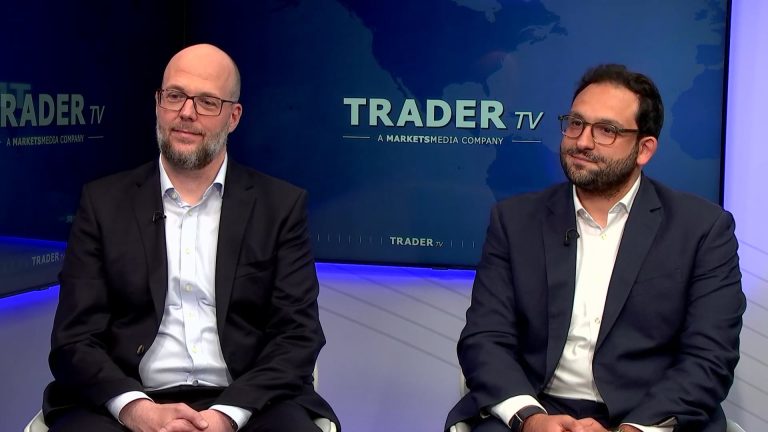
Fixed income traders face major challenges in pricing bonds accurately, especially in volatile markets where liquidity is scarce. Eugene Grinberg, CEO of Solve, says these issues are made worse by fragmented, unstructured pricing data exchanged via chat systems, as they create information asymmetry.
To address this, AI and natural language processing predictive pricing tools are being used to extract pricing insights from messages and calculate fair values for illiquid bonds to offer greater accuracy. These solutions are designed to enable traders, portfolio managers, and quants to benchmark prices, improve execution, and automate strategies.
While these tools currently cover municipal bonds, Solve is planning to extend the use of the predictive tool to corporates and other fixed income products.
Interview
Jo Gallagher What are some of the challenges that fixed income traders face in terms of trying to price bonds accurately, particularly in a highly volatile environment like we’re seeing?
Eugene Grinberg So, price discovery has always been a challenge in fixed income markets. As an asset class, fixed income is very different from equities, from FX. If you look at equity markets, it’s thousands of publicly traded companies compared to many millions on the fixed income side. So one of the challenges is there’s just not a ton of liquidity for the vast majority of fixed income instruments. If you look at any fixed income asset class, like corporates and munis, probably somewhere between 10, 15, 20% of it is actively trading, actively being quoted while the remaining 80%, there’s not that many buyers and sellers. That’s one issue. The second is market structure, right? So the way traders communicate is largely by chat, by messages. So a lot of the pricing is exchanged in these highly conversational, less structured ways. Which leads to the data fragmentation and information asymmetries that we know are highly prevalent in fixed-income asset classes. Our initial focus has been on helping market participants harness all the bids and offerings and market color that they’re seeing in these highly unstructured conversational messages. And this really has been the focus over the last decade plus. So as a result, we built proprietary AI machine learning natural language processing tools. To extract, as much of this foundational data from messages as possible to facilitate price discovery for the fixed income ecosystem. In the last couple of years, our focus has expanded to AI pricing because 80% of corporates, munis, and other asset classes are not actively quoted. This is where AI shines, where AI is able to look at various features of bonds that do have quotes, that do trades. See the world in hundreds of dimensions. We’re training our models on something like 300 different features, which look at the underlying bond characteristics. They look at quotes, they look at trades, and it’s able to price sort of the remaining 80% with a very high degree of accuracy.
Jo Gallagher And so how will buy-sides use that data?
Eugene Grinberg So it’s used by traders, it’s used by portfolio managers, it’s use by quants, by algorithmic traders, in a number of different ways. We benchmark the performance of our AI model to where trades actually happen, right? So we create a prediction based on the timing of the trade, the size, and the side, right, is it the bid side or the offer side? And we’re able to produce a backtest which gives traders a lot of confidence in the data. So they’re able to use it in the more traditional trading sense, the old-fashioned way, in addition to feeding algorithms and automation, which is really sort of the future of fixed income trading.
Jo Gallagher And I understand that this predictive tool covers munis right now. What are your plans to extend that further?
Eugene Grinberg I’m extremely excited to announce that we just launched the predictive pricing tool for the corporate bond markets. The quotes data that we collect, we actually do that in munis, we do it in corporates. We do it on securitized products, in bank loans, in credit default swaps. And our plan is, just like we’ve done with munis. Just like we just launched with corporates, to deliver the same predictive pricing across the gamut of asset classes.
Jo Gallagher I’d like to thank Eugene for his insight and of course, you for watching. To catch our other shows, including Trader TV This Week every Monday at 6.45 am UK time, go to TraderTV.net.
Catch the show each week:
To watch other Trader TV This Week shows go to – Video
Or make sure to follow us on LinkedIn – Trader TV’s LinkedIn
Available as a podcast – Link