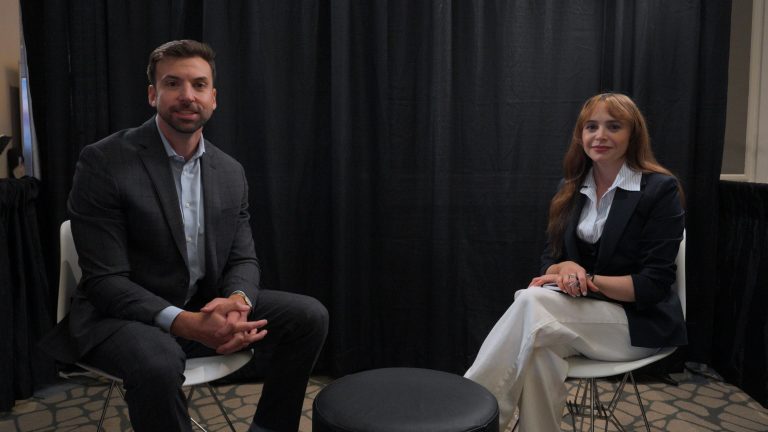
Buy-side desks are faced with challenging liquidity conditions and markets have seen no shortage of shocks in the first quarter of 2025. Joe Bellman, head of dealing at Arbuthnot Latham & Co., discusses how automation and the use of bilateral liquidity providers are helping his multi-asset trading desks navigate the recent turmoil.
In stressed markets, traders also have heightened pressure to scrutinize implementation costs against the certainty of execution, or their ability to trade their orders efficiently. Bellman unpacks his trader’s approach to implementation shortfalls; he looks at the rise of bilateral trading and discusses how his teams decide how much flow to send to alternative liquidity providers.
Interview
Jo Gallagher We’ve had no shortage of market volatility this Q1. With that context in mind, what role does automation play across your multi-asset trading desk?
Joe Bellman So trade automation plays a huge part in the trader’s role here at Arbuthnot, both in normal market conditions, but also in the stressed market conditions that we’ve seen over the last few months. About three years ago, we decided that we needed to try and automate a number of our trading processes, and we did this for a number of different reasons. But primarily, our traders were bogged down handling smaller orders where they could add no value and not having enough time to focus on orders that were very complex, very difficult and very large. So we started engaging with our vendors and working out how we could build a rules-based framework to automate away some of those smaller orders. That’s a journey that’s been ongoing, starting with equities and ETFs and recently moving on to fixed income as well.
We’re using a number of different platforms to perform this automation that enables us to automate our orders onto both bilateral liquidity providers, to agency algorithmic trading desks, as well as other platforms and services for our trades. There is oversight of all of those rules and conditions as part of our internal best execution committee, but the dealing desk really do own those rules that are built. We review them formally monthly, but there are tweaks that are available to be made throughout the month, especially if we see things like stressed market conditions. We’re able to turn them on and off or open the taps or close the taps if you like. And that’s something that we have a real focus on throughout the month.
In 2024, we automated around 50 percent of our equity trades, around 75 percent of our ETF trades and around 20 percent of all fixed-income trades, focused primarily in government bonds. Throughout 2025 and 2026, we really are going to focus on increasing those trade automation numbers. as we’ve seen the benefits both in our TCA (Transaction Cost Analysis) but in the efficiency of our desk as a whole as well.
Jo Gallagher In stressed markets and challenging liquidity conditions, there’s this battle between certainty of execution and managing trading costs. What is your process for navigating that?
Joe Bellman So as a UK-focused wealth manager, we’ve certainly had to get used to trading in challenging liquidity conditions. For us, the vast majority of our orders are benchmarked against implementation shortfall. So when our portfolio managers want to trade, they want us to trade as efficiently and as quickly as possible. So one really important piece of development over the last few years has been the rise of bilateral liquidity to the buy side in the UK and Europe. That enables us to efficiently transfer our risk to our counterparties. both manually and in an automated fashion.
We’ve been using it with great success for a couple of years now, probably 80-20 split to automation, and have seen excellent results, both in our TCA and in our broker scorecards. I think that this trend is going to continue into 2025 and 2026, both for us and for the market as a whole. It doesn’t suit all of our flow, but it does provide us a really valuable mechanism in which we can handle some of our lower ADV (Advanced Order Types) orders.
Jo Gallagher How do you decide how much flow gets sent to these alternative liquidity providers?
Joe Bellman So as part of our rules-based framework, we try to characterize all of the type of orders that we as a desk may receive, and we use those characteristics to drive where that order should go. For example, is the order a low ADV, low spread traded equity? Is the order tagged at implementation shortfall? Then perhaps that is appropriate to go to a bilateral liquidity provider. And rather than setting an arbitrary limit about what can go bilaterally, what can get algorithmically, we think of it more as what is the best approach for this order? And we found that has really paid dividends for us.
We obviously, as every buy side does, perform significant amounts of analysis on our trading flow. And we’ve seen that it’s improved our implementation shortfall numbers throughout 2024 and going into 2025.
Going forward, we are of course going to continue to measure and analyze these rule performances and ensure that they’re delivering the optimal outcomes for our clients. be that of trading bilaterally, trading algorithmically or trading on exchange. I think that all of these different things have a part to play in a buy-side trading desk’s toolkit.
Jo Gallagher Thank you, Joe, for your insight, and of course you for watching, this has been Trader TV This Week.
Catch the show each week:
To watch other Trader TV This Week shows go to – Video
Or make sure to follow us on LinkedIn – Trader TV’s LinkedIn
Available as a podcast – here