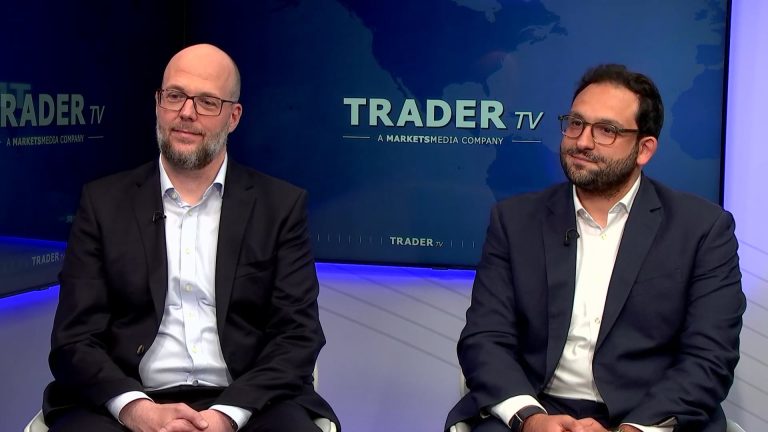
It will be a big week for market-moving news, with the US election on November 5, and the Federal Reserve and Bank of England deciding whether to cut interest rates at their next policy meeting on November 7. Adam Conn, head of trading at Baillie Gifford, looks at how trading desks could react to the news and could shape central bank decisions this week.
The head of trading discusses primary market inefficiencies, where the industry is at in being able to resolve these issues, and where the latest progress is being made.
Conn also looks at how the UK government is pushing ahead with private equity reforms including the Private Intermittent Securities and Capital Exchange System (PISCES), and what these initiatives could mean for the UK market.
Interview Transcript
Jo Gallagher Welcome to Trader TV This Week, your insight into how trading desks can prepare for the week ahead. I’m Jo Gallagher. Today I’m joined by Adam Conn at Baillie Gifford to discuss the main topics and events meeting this week. Adam, welcome to the show.
Adam Conn It’s great to be back.
Jo Gallagher We have a very big week in terms of market-moving news coming up. To start us off, how should trading desks be preparing?
Adam Conn Yeah, it’s a big week for markets. It’s a big week for the globe. As you’ll be aware, last week was budget week in the UK. We saw sharp moves in Sterling, and sharp moves in the bond market. As we go into this week, we have the US presidential elections. Some are saying it’s too close to call. The bookies seem to be suggesting that President Trump will be re-elected. Although the official election may not be called for a few days, even possibly a week, as the final votes are counted, the likelihood is that the market will have made its mind up just shortly after polling closes. So overnight, futures is going to be very interesting to watch.
As If the US presidential elections aren’t enough, later this week, we also have to rate cutting decisions from the Federal Reserve and from the Bank of England. In the US, as we saw last Friday, there was a weak jobs print, it is likely now the market is pricing in there’ll be a 25 basis points cut on Thursday and if we look ahead to 2025, the Fed funds future is now suggesting there’ll be 425 basis point cuts next year as well. That’s up from three before that jobs print. The Bank of England situation is particularly interesting given the market’s reaction to the budget, with Sterling coming off with Gilt yields back at highs, around the 456-457 level on ten years. They might want to hold off until the next meeting, allowing the markets to settle before they introduce a further 25 basis points rate cut.
Jo Gallagher Primary market inefficiencies are a core topic for our audience. From your vantage point, where is the industry in being able to tackle these issues?
Adam Conn In 2014, the Fair Trading Communities set out a protocol which would allow for the electronification of the application and allocation piece so we can transmit orders for IPOs and placings. And here we are in 2024 and nothing’s happened. We no longer want to have to manually send the same order to different brokers who are managing the deal. The risk is that one of them transposes a number, you get confusion, you get errors. The bigger risk is that the broker accidentally doesn’t even input the order into the system. So you’re not even in the syndicate book. These are problems which in any other industry would have been resolved by now. There have been reasons why this hasn’t happened, but the time is right.
Now, to effectively get rid of this last big manual process in the markets, and reduce the inefficiency. So what we really want to do is just make this as simple as possible. Electronic orders at our end would have gone through our pre-trade compliance, they’ll come out of our order blots and go straight to the syndicate desks. On the way back, the banks will be able to send the allocations out electronically, creating a more efficient, straight-through process. There is tremendous demand from the buy side heads of trading at asset managers, both large and small, [who are] really keen to move this process forward. The Investment Association, of which I’m currently the chair of the Equity Trading Committee, and the Plato partnership, of which I’m not a member at the moment, are both working to make sure everyone realizes the buy side as a group really wants this initiative to be successful.
Jo Gallagher The UK market is pushing ahead with private equity reforms. Could you tell us about PISCES and what stage that initiative is at?
Adam Conn So PISCES is the name given to a project to create a public intermittent trading venue that will allow for the transaction of shares in private UK companies. At the moment, private equity is traded on an OTC basis over the counter. There is little transparency in where stocks are trading, how much is traded, who really has orders, who’s just fishing for orders. The purpose of creating a venue is to allow companies to have periodic auctions in their own stock.
It allows their staff, for example, to sell share options. It allows investors to buy and sell with a full knowledge of where the share price is and how much is likely to trade. Some of the issues that we’ve seen have been making sure that people understand their responsibilities when it comes to the market abuse regime, that’s being worked out at the moment. We learned last week that there are definitely will be no stamp duty applied to transactions on PICSES, which is an important step. The next stages are likely to be a further consultation towards the end of the year. Then hopefully next year we’ll start to see some real progress. There’s no implementation date as yet, but hopefully the middle of next year will see some big movement.
Jo Gallagher And what could these reforms ultimately mean for the UK market?
Adam Conn I think what it does is it once again brings the UK to the center of global capital markets. You can trade public equity. You can trade private equity. That will be a world leader. More importantly, I think it is a conduit to allow the UK to attract investment, to allow it to grow.
The UK Government has made it very clear that one of its incentives, the UK pension review, is very much pushing for private equity to be included in British portfolios. From our perspective, what we want to see is the opportunity to create that great British portfolio that allows investors access to private equity, to publicly listed stock in UK companies that are investing the most in research and development, creating the most jobs, and creating the most growth. To be able to put all that together in one portfolio and offer it to investors is very exciting.
Jo Gallagher Thank you, Adam, for your insight, and of course you for watching, this has been Trader TV This Week.
Catch the show each week:
To watch other Trader TV This Week shows go to – Video
Or make sure to follow us on LinkedIn – Trader TV’s LinkedIn
Available as a podcast – here