Eurex is stepping up efforts to expand its presence in the US dollar credit derivatives market as buy-side participation continues to accelerate. Speaking at the Fixed Income Leader Summit in Boston, global head of markets Lee Bartholomew said the exchange has seen more than 80% month-on-month growth in new buy-side clients, helping deepen liquidity and broaden market activity. He said Eurex’s strategy is focused on building a global, multi-currency credit derivatives ecosystem, with further expansion in the US and Asia supported by growing hedge fund participation and enhanced clearing services.
Interview
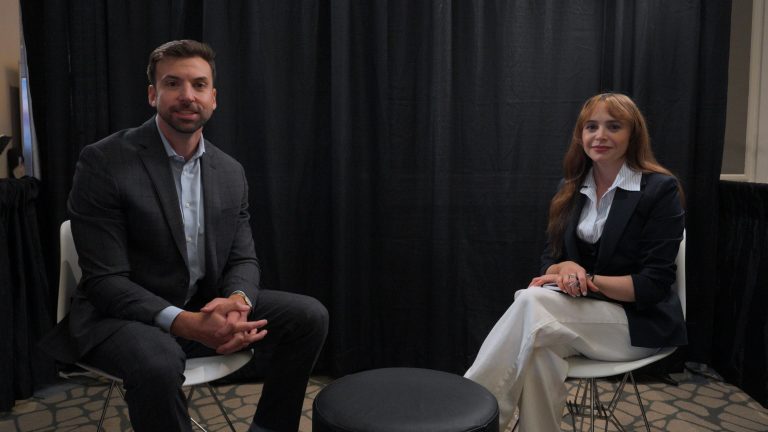
Josephine Gallagher – Welcome to Trader TV. We’re here at the Fixed Income Leader Summit in Boston, and I’m joined by Lee Bartholomew, global head of markets at Eurex. Lee, welcome.
Lee Bartholomew – Thank you very much for having me. Appreciate the opportunity to speak.
Josephine Gallagher – Brilliant. Okay, so we have had a manic year, and you’re the perfect person to talk to about this. We’ve had elevated volatility, we’ve had oil price inflation, and also there are some concerns around credit risk as well, credit concentration risk. So, how have you seen credit derivatives strategies adapt to that this year?
Lee Bartholomew – Well, first of all, it’s been an interesting quarter one. Both from a rates dynamic, credit perspective. I don’t think credit markets have seen as much distress as rates markets. What we did see is kind of clients coming into the year net long credit. Obviously, the Iran-US war caused a pivot in positioning, right? So we saw clients going from net long to net short. That said, I think there’s just been lots of opportunity, right. So as the ecosystem’s grown in quarter one, right. We’ve kind of seen more hedge funds come into the market, which kind of helps with the price formation, the diversification on the liquidity side, right. So it gives banks an opportunity as well to recycle risk or non-bank LPs (liquidity providers) to recycle risk. And also what we are seeing now is that kind of build up between tactical positioning and structural. So hedge funds tend to come in when there are dislocations, decompression, dispersion, and then you’ve got real money that’s kind of using the products for kind of structural, to express structural views within the market. So, what, what does that mean in layman’s terms, right? So we see CDS (credit default swaps) basis being traded, we’ve seen ETFs (exchange-traded funds) versus futures, right? So premium discount versus the ETFs, and obviously, as well, on top of that, you’ve seen kind of borrowing costs, that blow. So the attraction of using futures has become more attractive because you’ve been able to get those on at zero-funding costs.
Josephine Gallagher – Gotcha, that’s kind of what I wanted to follow up as well with you, in terms of like asking, how what what kind of sizable shift have you seen in the participation from real money investors, and like you said, hedge funds, and how is that also like interacting with the liquidity in that framework?
Lee Bartholomew – So don’t shoot me if I don’t get this exactly right, but I think it’s between 80 to 90% of our open interest is held by buy-side clients. Now, what we have seen is a material increase in buy-side participation, right? So we’re talking kind of north of 80% month-on-month kind of growth in terms of new clients coming in. So what we now see is that ecosystem becoming healthier. Why banks can recycle risk. Non-bank LPs the same. They’re trading a lot more across product, right? So futures are therefore seen as part of the toolkit. So, what do you see there is the kind of ETF versus the future, the future price versus the NAV. We’re also seeing the basis trading in CDS markets, right? So, where there’s the dislocation, the hedge funds tend to come in, and they’re tactically positioning, but at the same time, as well, I think real money’s got a lot more comfortable with the use cases, right, so you’ve kind of seen them coming in, trading euro versus USD, right, and I think for us that’s healthy, because what we’re seeing then is much more of a multi-currency approach, so we’re not just seeing now the specialists at real money in terms of crossover accounts or multi asset, but we’ve seen the specialists come in to trade the products as well.
Josephine Gallagher – Okay, really interesting to see. Also we have to talk about the fact that we’re here in FILS Boston, and given the fact that you’re from Eurex, of course. So tell us, how would the likes of Eurex, or you know, how you differentiate yourself against some of the other kind of major derivatives exchanges out there in the US, particularly in terms of building liquidity and building adoption across the buy side.
Lee Bartholomew – So, first and foremost, I can’t take any of the credit for, and excuse the pun for what the team has done. I think Davide, Leon, the sales team, risk teams, and clearing teams, have all done a great job to get the products where we’re at. I think this is one of the products where I can say we want the segment, I should say, actually, where we want to be truly global, right. And I think the benefit of that is the market’s still quite nascent, right, relative to what you see trading in CDS. I mean, we had a record June, right. So, I think we saw 65,000 contracts, so it’s around 5 billion notional trade. Why Eurex? I think the way that we’ve got the liquidation groups set up now, right? So, we’ve got FX within rates and credits, I think that offers an attractive ecosystem. As we adapt our risk models, I think that will go across right against other index products eventually, as we, as we kind of move, move through and see that build-up of liquidity, but what I think the team has done a great job of is working with the end users on the use cases. Right, so there’s lots now of material around how we do it. And I think a lot of that is down to the team, right? The team are working really closely with end users, and I think when they come to us, A they feel they can trust us, and obviously the depth of knowledge is there, right, whether it’s trading the product or whether it’s pricing and structural. So I think overall, UX is the place to come to trade your credit derivatives, and our ambition is, you know, I think a lot of companies, like JPMorgan, BlackRock, they’re quite explicit on this, we want to be number one in credit derivatives.
Josephine Gallagher – Okay, so final questions, where do you see kind of the biggest developments over the next 12 months to 18 months of credit derivatives?
Lee Bartholomew – So I think the team’s doing a great job with, with Asia, right. We’ve got a very strong franchise out in APAC, and I think we can do really well on a multi-currency basis there, right. They’re already heavily using our core franchise of products, right, rate. So I think that that’s something that they, they’ll continue to do. The US domestic market is really important for us, so I want to, I want to kind of remove the regional bias. And I think we can achieve that by working closely with with our clients to use those products. I think what we’re doing with the hedge funds has been really good, right? So I think I always said, right at the beginning, how we would build it out would be real money first. So this is a real money led product. We’ve now got the hedge funds coming in. So, I expect that to continue to increase, and then on top of that, then we’ll get the systematic guys scaling what they do, and then I think you’ve got a really healthy ecosystem, because then what we were then doing is looking at our access models, right. So, what do we do with the likes of Trumid, TradeWeb, MarketAxess, RFQ Hub, right. So how do clients get access to the products that they want to trade, PT (portfolio trading) trading, cash, futures, ETFs, that ecosystem for me will grow, and as an exchange, what will strengthen is the clearing layer around collateral and risk management. And I think that gives us a really strong position for 2027, 2028 and 2029. The focus, to be explicit, is crack the dollar market, and I think that just helps us overall with the segment.
Josephine Gallagher – Brilliant, it was great catching up with you, Lee. Thank you very much for your time.
Lee Bartholomew – Thank you very much. Appreciate it.
Josephine Gallagher – I’d like to thank Lee for his insight, and of course for watching, this has been Trader TV at FILS.