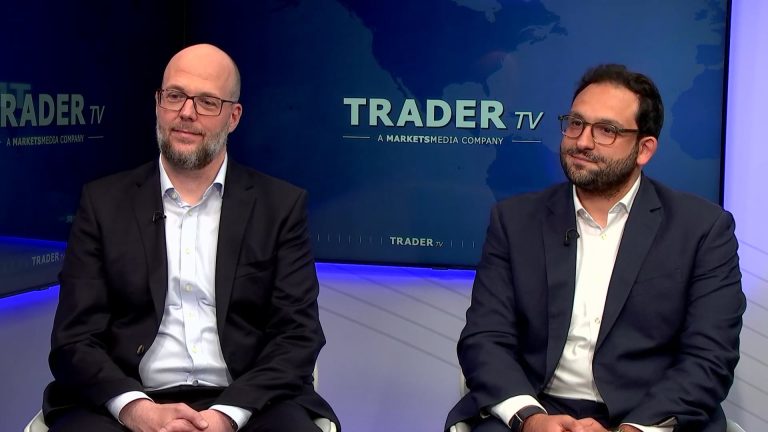
Orlando Gemes discusses Fourier Asset Management’s data-driven, systematic trading approach designed to uncover mispricing between credit and equity markets. He unpacks how his team identifies mispriced volatility in convertible bonds and options; looks at the buy-side’s shift to a gamma-focused approach, and how his models use empirical data for identifying predictable bonds with attractive payoffs.
Interview
Josephine Gallagher – And so I understand you also employ a systematic trading approach. Tell me, how do you train your models to respond to market volatility, and also like identify any opportunities in credit and equities.
Orlando Gemes – So our thesis is very much that credit and equity markets are often dislocated and mispriced. However, we wanted to come at this very much from a scientific angle. So we collect, aggregate, and clean data, and we use a range of scientific approaches to then study that data. The models that we employ are based around data rather than the theoretical models that most banks and most trading firms employ, be it in convertible bonds or in option prices, we then seek to systematically identify opportunities that the market has ignored or are unable to access. So we’ve spent a number of years building a systematic approach to convertible bonds. This hasn’t really been employed previously, so we deployed our first strategy in May last year. We then pivoted to our second strategy at the beginning of November, which is a gamma strategy. In that strategy, we use our systematic models to identify bonds that are more predictable than other bonds, and we discard those less predictable bonds. And then we looked at which bonds have the most attractive payoff profiles. We build a diversified portfolio of those convertible bonds, and then we then we harvest the gamma, and thankfully, the performance of that strategy is actually beating its back test. So a big market-leading firm like AQR says they expect to harvest potentially 50% of their back test, we are actually, after 60 days, outperforming our back test and delivering a very high, unlevered return with low volatility and low drawdowns. So we think we are starting to prove our thesis that a systematic approach to credit is compelling, not just on the sell side from firms like Jane Street, but also on the buy side.
Josephine Gallagher – I understand another thing that you do is that you identify mispriced volatility, and you do that by looking at tail risks on the right and the left. Can you explain that a little bit for us?
Orlando Gemes – Normal distributions of returns are a key foundation of a wide range of financial models. As experienced practitioners, know we have fat tails and we get a wide range of results that are unpredictable. As credit investors, we spent 25 years looking at the left tail, the risks, the big drawdowns that happen in markets. But as we’ve evolved, we’ve come to focus equally on the right tail, the opportunities when markets rise significantly, and those opportunities can be mispriced, and that gives a wide range of ways of constructing a trade. In 2025, we saw Bitcoin go on a wild ride. Starting the year high, falling rapidly during the tariff period, rising again and then falling rapidly into the end of the year. MicroStrategy has been one of the largest issuers of convertible bonds, and is obviously in the crypto sector. Volatility got down to a low of 55 before exploding to the upside, and that was an opportunity that allowed us to harvest gamma in that strategy. And we’ve seen a lot of situations like that which is now very much happening in gold and silver.
Josephine Gallagher – You also use empirical data. How have you found empirical data to be superior to theoretical data in your trading strategies, especially in credit?
Orlando Gemes – So credit is an incomplete, inconsistent asset class where the liquidity varies greatly from the US to Europe to Asia, from investment grade to high yield to convertible bonds and derivatives. So rather than say what we think, we wanted to focus very much on what we know, where we can find opportunities that are mispriced or dislocated. With great, with greater clarity, with a systematic approach, we’ve been able to build a process that identifies those bonds that are predictable and those bonds that are mispriced and those that are not and this allows us to generate a level of alpha that is highly uncommon in credit strategies.
Josephine Gallagher – And now to wrap things up, Orlando, tell us, what else should trading desks be monitoring this week? What has the potential to maybe, you know, create shifts in volatility, in liquidity, and also, are there any untapped trades that we should be looking at?
Orlando Gemes – You know, when we are trying to be creative and thinking about what could be the greatest challenges to financial markets over the next year, we see a range of pressures building up, both on the left, at the risk side, and at the right, and we find opportunities that we think have been mispriced. In the convertible bond world, we have seen a significant amount of issuance from metals and mining companies. Those bonds have significantly outperformed and, on the whole, outperformed their Delta. The liquidity has been incredibly robust, but there are stresses in the marketplace that you know we are entering a paradigm where people are more challenged about just what the implications are for the US dollar, for US Treasuries, for gold, for emerging market equities, and that is creating what we see as a very rich environment for alpha-generating strategies.