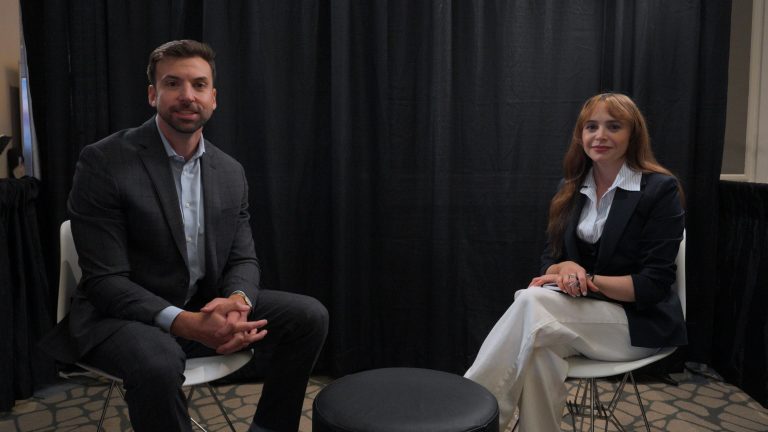
“Trading is a relationship business and it will be a relationship business in the future”.
Technology, no doubt, is transforming the world of finance and trading but Leander Meijering, rates trader at Achmea Investment Management, believes there are many limitations to automation on the desk. In this episode, he looks at how traders themselves and their individual relationships between counterparties and investors are central to the success of a buy-side firm.
Meijering also discusses how Achmea IM has recently revamped its fixed-income trading desk to become more efficient and centrally organized—in addition to implementing a semi-multi-asset trading function while also embracing specialization across traders, quants, and portfolio managers.
The rates trader carves out where he sees technology making the biggest impact on the desk in the future and offers some words of wisdom to anyone considering a career as a trader.
Interview Transcript
Jo Gallagher Welcome to Trader TV Generation Trader, where we look at the positive impact of diversity on the trading desk. I’m Jo Gallagher. Today I’m joined by Leander Meijering at Achmea Investment Management to discuss his journey into trading and where he sees technology playing the biggest role across fixed income desks today. Leander, welcome to the show.
Leander Meijering Thanks, Jo. Thanks for having me. Great to be here.
Jo Gallagher To start us off. Tell me about your role, Achmea and what drew you to the trade desk.
Leander Meijering So I’m a rates trader in the centralized trading desk at Achmea Investment Management but my main focus is on trading rates, products. So this means derivatives like IRS and futures, but also bonds, which range from government bonds to SSA to credits. Our main focus on Euro because our clients are pension funds and insurers from the Netherlands.
What drew me to the trading desk is basically the adrenaline. It can be very fast paced sometimes it’s like driving a race car. You have to be very quick on your feet. Things go very fast and the day is over in a second. And then there are days that’s more like riding an old bike. It can be quiet. You’re waiting for the flow. But the fun thing about these days as well is at any moment it can change. Every day is different and really, this change of scenery is real appealing to me and [what’s] really great about this job and also the impact you have. When you see your slippage, you see the euros, you are gaining or losing. It really gives a sense of urgency. This is something that’s very appealing to me and makes it so exciting to be a trader.
Jo Gallagher And then how is Achmea’s trading desk organized?
Leander Meijering So recently we made some changes before we had the PMs, the quants and a traders in one team, where even some PMs did their own trades. But we believe that in this competitive market, if you want to have an edge, it’s so specialized, you need to have focus areas. So now we have a centralized trading desk. We have a dedicated quant team and a dedicated PM team. But it doesn’t mean that we don’t collaborate.
Collaboration is very important between the teams, as with the quants we have to give good input. So we need to know about technical stuff as well. And within the trading desk we have our focus areas, but we are able to trade each other’s product as a backup. So I focus on rates, we have got another colleague. We have two traders focusing on credits and two on equities. So it’s sort of a semi multi-asset desk where we try to find synergy and a combination between focus and being able to do everything. So far, I think we’re quite happy with this working out quite well.
Jo Gallagher How is technology transforming your workflows and where are you seeing the biggest impact?
Leander Meijering So for us, I think the biggest impact was going from bilateral trading for IRS to cleared. I think we were in 2015 one of the first movers to do this, it electronifies trading. So before everything was voice. So now we usually trade over a platform and we really see the benefit of this, especially why we have a bilateral trade like an unwind. We can see like the valuation difference, CSA impact and how much more efficient trading has become since we do everything cleared. So this is having the biggest development. Also automating the workflow for small trades so that we don’t have to focus on all the small ticks and just click them.
On platform it saves a lot of time. But also on TCA, the pre-trade and post-trade analysis we have a broker ranking which we can see like, okay, which counterparty is good at which sector, which areas of the curve or which countries or any names in particular. But also it gives us the ability to give very specific feedback to our counterparties and justify this feedback by the data you use. I think this is really something that evolved over the last few years and will evolve more and especially now that we have a dedicated quant team, we are looking to integrate all the data from every asset class and trade into one tool.
Jo Gallagher As we know what the buy side are trying to become more efficient. But what are the limitations to automation?
Leander Meijering Yes, I think there are two main things. First of all, it’s a relationship business. So especially in this case, a lot of negotiation with counterparties. Maybe in the future the algo does 90% of the trades for me, but I need to keep the relationship with the counterparty intact and keep it warm because when a black swan event hits or volatility is very high and they have to shut down, you are going to have to call my counterparty like, ‘Hey guys, can you give me a tight bid-offer here?’.
If I haven’t talked to them in like a year, then they will be like, ‘No’. So you have to keep the relationship warm and intact. And on the other side, you have the client as well, obviously. So something that will not change is the fact that I have to explain the execution to the client. No matter if I do the trade or an algo. I have to explain how we trade. What did the algo do? What were the market circumstances, etc., etc.. I still have to be able to explain this. I still need to know what the algo does. I still need to be in markets to know what’s going on. I think these are the main limitations.
Jo Gallagher And what advice would you offer someone considering a career in trading?
Leander Meijering Be passionate. Like I always say to people, you don’t need to be a human calculator or you like a math wizard, that can crunch numbers very fast. In the end, it’s all about passion. And also, I think it’s very important to have tech skills. You don’t have to be a full quant, but to give input to the quants to say, I want this or to give feedback and to know how algo works. You need to have some kind of tech skills and in the future these tech skills will be more and more important. But don’t forget that one of the most important things, I think, especially in OTC trading is still see trading is still social soft skills, and negotiation skills.
Sometimes it’s like a garage sale. It’s persuading someone to get a better price. Sometimes you are on the phone,. You can be on the phone for 30 minutes, or on the chat trying to get a better price. You use this relationship you have with this counterparty. You try to be a bit funny sometimes just to get you a better execution. Sometimes you need to be a bit tough. To end the conversation on a positive note, there will still be a job out there for you. Algos will definitely become more and more part of our workflow. But it’s all about adapting to them and collaborating with them because in the end it relationship business and it will be a relationship business in the future.
Jo Gallagher I would like to thank Leander for his insight and, of course, you for watching. To catch our other shows, including Trader TV This week, every Monday at 6:45 a.m. UK time. Go to Tradertv.net or sign up to our mailing list at Tradertv.net/subscribe.
Catch the show each week:
To watch Trader TV This Week shows go to – Video
Or make sure to follow us on LinkedIn – Trader TV’s LinkedIn
Available as a podcast – here