With record levels of debt issuance hitting the market, trading desks need efficient set-up for new issues onto their order management systems. From private banks and hedge funds who are keen to engage in the grey market of secondary trading straight after issuance, to large, long-only firms who want better and more streamlined processing of allocations, buy-side firms can use data to better access primary bond markets.
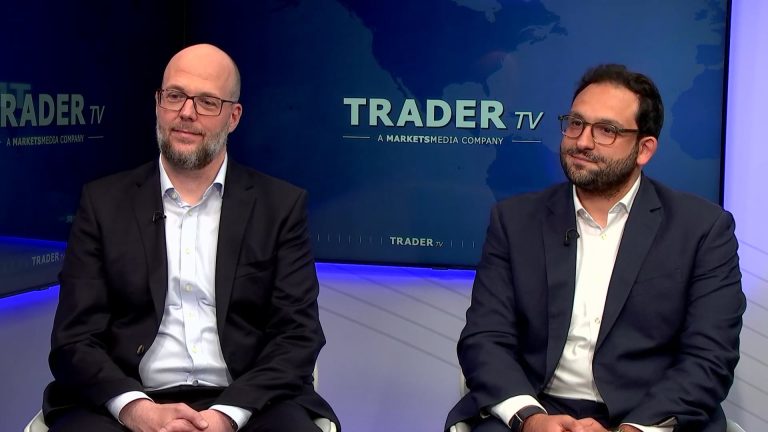
Trader TV caught up with Joe Farrands and David Everson of Liquidnet to understand how different demographics are trying to access the market, how Liquidnet is supporting them through new, innovative services, and the way that new technologies and data can fit into the workflow for primary market access.
Transcript
Dan Barnes Welcome to Trader TV, your insights into institutional trading, I’m Dan Barnes. 2024 was a record year for bond issuance and tapping that early liquidity delivered real value for investors and the issuer’s syndicate banks. Here to discuss how to maximize access to the primary market are David Everson and Joe Farrands of Liquidnet. David, Joe, welcome to the show.
David Everson and Joe Farrands Good to be here, Dan.
Dan Barnes Last year was a record year for issuance. But how is your primary markets offering been helping clients through that period?
Joe Farrands We break the offering down into three streams. So there’s the data aspects, there’s improvements to the workflow and then there’s liquidity. So certainly on the data side, it’s the less glamorous end of the innovation curve, but it’s obviously paramount to the more exciting developments that are going on. So we’re helping clients that by aggregating a lot of unstructured data from our network of just over 35 European syndicate banks, sending us that unstructured deal data, as the deals are being launched and coming to market. We pass that information into a machine readable format and we give it back to the market. And the intention here is to set up bonds much faster in risk and trading systems so we can start interacting with them electronically. And that’s critical for everything from messaging syndicates, but also for us for gray market trading. We have a new issue trading CLOB for gray market securities, which has grown three fold last year. And what it’s bringing is more liquidity, real liquidity to the whole marketplace. It’s at a stage of the bond’s lifecycle where liquidity is a lot less contentious. You’ve got the whole marketplace interacting at the most liquid time of a bond’s life, and it’s creating more pricing transparency for investors to make investment decisions as the bond is being launched.
David Everson Demographic wise, we have a hugely diverse liquidity pool. We saw over 300 institutions active with us in 2024, which was around about double what we saw in 2023. Early in the morning, we usually see kind of private banks, family offices, fast money type accounts start us off of a market in the bond, sometimes minutes after the deal was been announced. They are providing valuable price discovery and firm liquidity. Generally speaking, as the books continue to build, we start to see other types of accounts getting involved. In terms of strategies, there are various different reasons why someone would want to try to bond in the gray. Perhaps you’ve been historically under allocated on the name, perhaps you’ve received an allocation, but you’re an asset manager and you’re struggling to split that allocation between the different funds that are relevant. Or finally, maybe you think the bond’s been priced too cheaply and you’re speculating that the price might go up.
Dan Barnes Yeah, very good. Thank you. And then behind the scenes, with all this activity going on, what are you seeing?
Joe Farrands Having access to this as an electronic liquidity pool is requiring a bit of change. So I think one of the biggest challenges are seeing different market participants, be it banks, market makers, real money, working out how this can fit in their workflow. You know, particularly the buy side are not so used to trading on central limit order books or leaving resting liquidity. We are seeing that confidence grow as people work out how they can obtain a benefit from leaving firm rest in liquidity on screen rather than just being price takers in this space. And similarly, while we’re doing that, it’s creating a brand new dataset, certainly for the European market. So you’ve got the conventional data coming from the syndicates around how the deals are performing. You’ve also now got, you know, adjacent to that, the way the market’s pricing and reacting to the news coming out the same time. If you overlay those datasets, it’s really interesting for decision makers and risk takers. Our clients have got access to that today. So you can consume both datasets sort of manually or via an API. It is something we’re looking to get better at finessing and distributing. You know, we’re keen to work with our clients on, you know, what’s useful for them and how they can receive it.
Dan Barnes Fantastic. And David, where do you see growth coming from in the future?
David Everson Well, obviously we’re hoping for another busy issuance cycle. Last year was record breaking demand and we hope to see more of the same this year. At the back end of 2024, we also launched a major structural update to our trading systems, which should allow for much higher throughput and give our clients a much better trading experience all around. 2024 really for us was a year of institutional adoption. You know, we traded with some of the world’s largest banks, asset managers, hedge funds. We see that trend continuing in 2025 as people become more comfortable trading gray markets electronically.
Joe Farrands Think away from the trading aspects, more on the workflows and the data. I think we’re going to see more adoption certainly on the data front. Getting orders from investors into the syndicate books is, you know, is a crucial development. All the piece of the jigsaw there within the market and 2025 probably sees those come together. As the OMS (order managment system) integration is built out, we’ll see a lot more partnerships working successfully. I suspect that will be where the innovation comes from rather than any sort of big bang new entrants to the market.
Dan Barnes I’d like to thank David and Joe for their insights today and, of course, you for watching. To catch up on our other shows, including Trader TV This Week at 6:45 a.m. UK time every Monday go to Tradertv.net.
Catch Trader TV shows each week:
To watch Trader TV This Week shows go to – Video
Or make sure to follow us on LinkedIn – Trader TV’s LinkedIn
Available as a podcast – here