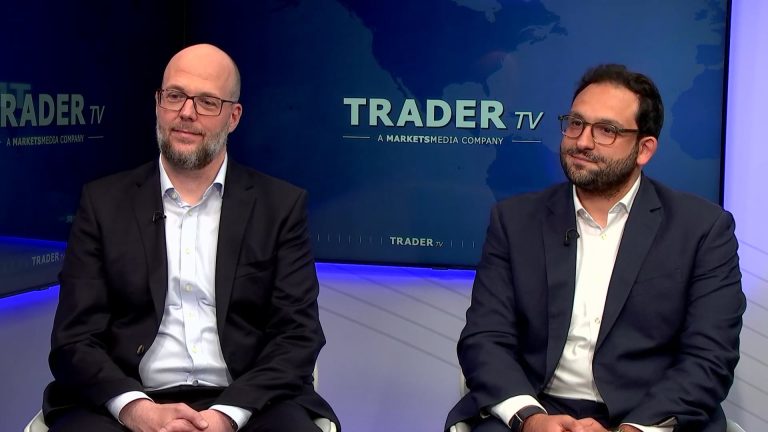
Ben Ashby, chief investment officer at Henderson Rowe, tells Trader TV that it’s time for buy-side desks to take chips off the table and de-risk ahead wrapping up their 2024 positions as markets are vastly underestimating the impact of risks—including the deteriorating political conditions in Europe, growing deficits, and the struggling Chinese economy. The CIO also unpacks year-end liquidity, market mispricing, and potential trading opportunities to look out for in 2025.
Interview Transcript
Jo Gallagher Welcome to Trader TV This Week your insight into trading desks can prepare for the week ahead, I’m Jo Gallagher. Today I’m joined by Ben Ashby at Henderson Rowe to discuss the main topics and events leading this week. Ben, welcome to the show.
Ben Ashby Hi, Jo. Great to be here.
Jo Gallagher So we’ve had a busy year, to say the least, and there are no signs of things quieting down, particularly given what we’re seeing in Europe in terms of the political arena. Ben, what are you seeing in terms of market activity and conditions as we come into year-end?
Ben Ashby We’ve got a severe dislocation between the major developed markets of the world. In the United States, you’ve got what seems to be extreme optimism, particularly around risk classes such as equities, because of the view that the Trump administration will be very pro-business. And in Europe, you’ve got deteriorating sentiment because of the political chaos in France, continued problems in the German economy and their political system as well, and general economic mismanagement by the new UK government. Of those two markets, the one that actually concerns me most is the optimism in the United States. I remain unconvinced that Trump is going to be 100% positive for the economy. And actually, some of the policies he’s suggesting could be significantly detrimental for the economy, certainly in the short term. Possibly in the medium term, too.
Most obvious would be tariffs, which he seems to view as an absolute winner for the United States economy, but quickly overlooks the fact that actually there are complex supply chains where China has a key part in there. And by putting tariffs in there, the end user, which will be the US consumer, will almost certainly suffer. US rates to my mind, still seem to be underpriced in terms of the risk that they are going to have to issue a lot more debt next year. And in Europe, I still think investors need to be paid more, for the credit risk involved. There seems to be an assumption that the ECB will be able to fix everything. Probably have to resort to some kind of money printing.
Now, for those of us who are old enough to remember the Lehman default, and I’m not suggesting that’s where we get into just yet. One of the reasons they didn’t bail Lehman out was the regulations said that they couldn’t bail Lehman out because it wasn’t solvent. So the ECB will again have to jump through a series of hoops, which they may well do. And the market has assumed that to fund France and potentially some of the other eurozone countries if there’s continued funding stress. I would step back and say one thing on that. The euro is a political project. If it comes apart, which I think is highly likely at some stage, currency unions have come and gone over the years. It will also come apart on the political side first as well. And that’s generally how countries start to get destabilized.
I don’t think that’s the year-end business. I’m fairly certain it won’t be 2025’s business, but there just seems to be this view that it’s here forever. And actually, that would be very much an exception for a currency union, not the norm.
Jo Gallagher And so what are your expectations then for liquidity across Europe and the US as we tie up the last few weeks of the year?
Ben Ashby So the key thing is liquidity tends to dry out towards year end anyway. Probably the most important thing is dollar-based funding. A lot of institutions closed their books and they have to have everything sorted out for their auditors, regulators and accountants by year end. Most of the big decisions have been made for the year.
Dare I say, as an ex-investment banker, compensation has largely been decided. So it’s not normally a time for people to be taking risk. And that would actually be my suggestion. Moving closer to the benchmark, perhaps at this time might be the prudent thing to do. Particularly on the equity side, there is an enormous amount of risk being taken and I would be concerned that the biggest surprise would be a reversal going into year-end. So perhaps now is the time for taking a little bit risk off the table rather than hoping for Santa to bail out your portfolio before year end.
Jo Gallagher What are the biggest risks that trade desks need to be aware of as we wrap up 2024 and look ahead to 2025?
Ben Ashby Number one for me is the US rates and the US has got a lot of debt to finance next year along with other developed nations. We are beginning to see some of the money market-type funds that have funded this previously beginning to get lower and lower in terms of available cash to deploy. The previous US Treasury Administration has not generally issued much in terms of term debt. They aggressively finance at the front end of the curve. With Trump coming in this is now going to be a very expensive thing for them to do because it seems clear to me that rates won’t be coming down.
Another thing I’ll identify would be energy. I think there’s a reasonable chance that inflation is going to start spiking up again. But one of the key drivers is the energy complex. If you look at market activity, pretty much everybody is bearish energy at the moment. The consensus is overwhelming supply. But I would just point to 2 or 3 things that are worth considering on that. First of all is geopolitical risk. There is the assumption that the Ukraine war will be winding down next year. I’m not entirely certain that will happen. Secondly, higher rates and potentially a bear steepening of the US rates curve will have an impact on U.S. shale gas production because that is a largely junk-financed industry that will now have to pay higher costs going forward. And there’s also been generally a big underinvestment in traditional fuels over the last ten years or so under the assumption that effectively green energy is going to pick up the slack.
Now, what we can see in Germany, that certainly hasn’t been the case, and yet that hasn’t stopped particularly some of the European countries continuing to go on with these energy sources. So I think you’ve got 3 or 4 things in there where you could potentially see the market being surprised. They are bearish, thinking that fuel prices will generally go down where energy prices will go down. And nobody’s particularly positioned for a big spike up, even though there’s clear positive convexity in terms of what happens if there’s risk events in places like the Middle East or actually a reignition of the Ukraine war rather than a wind down.
Jo Gallagher And so where are the biggest opportunities to make the most of the rest of the year and looking into 2025?
Ben Ashby If I was to make a very crude assumption about what happens in 2025, I think the liquidity tailwinds will propel us quite aggressively probably into H1. I suspect that will continue to be very positive for risk assets. I suspect as we go into Q2, the vast amounts of debt that needs to be issued by developed governments is likely to start repricing fixed income. Ultimately, I think the fixed income market needs to be demanding higher rates. I don’t think the rates that we’re seeing at the moment, particularly as we go further out the curve, are reflective of conditions. Governments have an enormous amount of debt to issue. They also have aging populations with huge amounts of health and other welfare benefits to be paid, and they are running deficits in theoretically, the good times. As we all know, the economy will turn at some point and these deficits will become even larger. One of the big variables is what happens in China. China is going into a deflationary downturn, which may well, and in my opinion, will almost certainly turn into something worse over time. They are also the world’s largest producer of tradable goods.
So if you think about most economies, you’ve got non-tradable goods, which is stuff that the government can influence. And tradable goods, which is stuff that moves around the world that governments can’t really influence. Clearly, China will put deflationary pressure downwards on tradable goods. And with some of the policies that we’re seeing at home, we might end up with a complete policy mismatch where there is something that looks a bit more stagflation-free at home. But actually quite a lot of significant downward pressure in terms of goods. My suspicion is problems will start to emerge around Q2. So my gut feeling is if you’re a trader, you want to aggressively take risk, probably on the long side in the first half of the year, look to bank the gains, take some risk off, and see how things develop as we move into the summer, which tends to be a volatile time anyway, partly to do with weaker liquidity conditions.
Jo Gallagher Thank you, Ben, for your insight and of course, you for watching this has been Trader TV This Week.
Catch the show each week:
To watch other Trader TV This Week shows go to – Video
Or make sure to follow us on LinkedIn – Trader TV’s LinkedIn
Available as a podcast – here