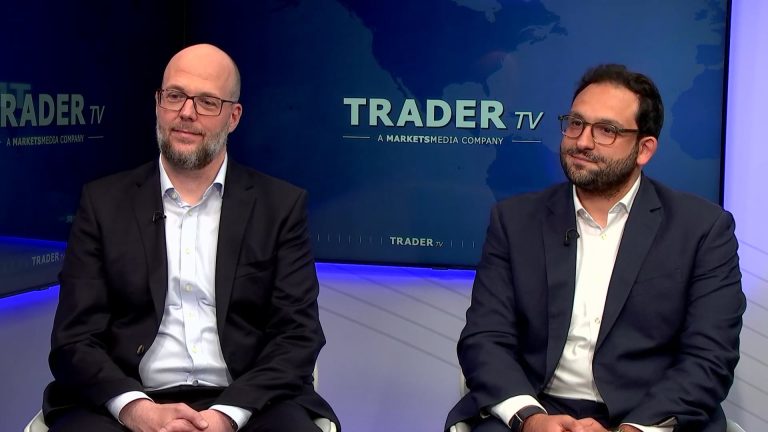
Matt Howell, global head of trading strategy at T. Rowe Price, reflects on a “series of warning shocks” that have challenged market conviction and reshaped positioning across asset classes this year.
In this episode, he shares his perspective on the expanding real-world use cases for tokenization, blockchain, and digital assets, while addressing industry concerns about potential market fragmentation as new infrastructure develops.
Looking ahead, Howell outlines the key themes on his radar, including AI moving from theory into practical application on the trading desk, shifts in market structure and liquidity provision, the growing importance of automation and data quality, and the critical role of operational resilience in modern trading.
Interview
Josephine Gallagher – To kick us off, tell us what has been driving your investment and trading decisions so far this year.
Matt Howell – Well, as you’re aware, this is a macro tape that’s designed to prove any forward-looking commentary wrong in pretty much short order. So I’ll stick to a couple of high-level observations. Many of the moves seen last year and again, at the start of this year, have been an expression of reflation, a bet on higher growth and inflation, which historically has seen the market pivot towards value and cyclical equities, hard commodities, and favouring short-to-dated over longer-dated bonds. The value trade in particular has been on the radar for a while now, although it’s clear that the rest of the world has been pivoting ahead of the US there, where AI and growth have been dominating. More recently, we’ve had a series of warning shocks. This likely started with some extreme moves in the Japanese bond market, which were quickly dismissed as an idiosyncratic liquidity air pocket. But shortly afterwards, we saw outsized moves in the dollar and then followed by the well-documented volatility in precious metals. More recently, over the course of the last week, we’ve seen some pretty extreme moves in quant factors in equities. This all follows a pretty well-trodden path of cross-asset VAR shock, where the sudden increase of volatility in one asset class forces levered funds to take down their gross in other asset classes they’re exposed to in order to keep their risk managed. This backdrop often forces broader market participants to reexamine their conviction levels. And the key questions remain, how far are we through this repositioning, and whether it’s more indicative of a more sustained regime change, or is merely a reflection of positioning and leverage getting too extreme. One thing that could provide a little comfort is that, compared to other recent market events, correlation overall remains relatively low, a stark contrast to April last year.
Josephine Gallagher – So, for the second part of this conversation, I’d like to talk about tokenization. There have been a lot of buy-side firms and exchanges announcing initiatives around tokenization and digital assets. What is behind this investment and are you seeing any compelling use cases emerge?
Matt Howell – So what’s changed over the last couple of years is that tokenization has moved from being a theoretical concept to something firms can actually work on in more practical way. The US regulatory backdrop has also moved from one of active skepticism to an SEC (Securities and Exchange Commission) and CFTC (Commodities Futures and Trading Commission) more interested in collaborating and consulting. The messaging has switched from having a chilling effect on innovation in this space to a more encouraging environment. The large US banks had seen the potential that tokenization could bring, but had been locked out in practice by the regulatory backdrop. This meant that the market looked maybe a little less interested than it actually was, and we’re now seeing the effect of that pent-up investment. At a high level, we think about the opportunity across three pretty broad areas. First, there’s an efficiency angle. Tokenization has the potential, over time, to simplify middle and back office processes. Second, there’s a product dimension. As more assets move on-chain, it opens doors to things like fractionalization, customization and potentially new ways of accessing existing markets. And third, there’s a distribution element. Tokenization may allow asset managers to reach investors through different digital channels, particularly a new generation of investors more native to mobile and blockchain-based environments. None of this happens overnight, but taken together, these three areas explain why there’s so much of a focus on tokenization in finance right now.
Josephine Gallagher – One big concern is that the development of a separate infrastructure for tokenized securities could actually create further market fragmentation and impact liquidity. What are your thoughts on this?
Matt Howell – I think in the near term, that’s a really fair concern. Anytime we have new infrastructure emerging, there is a real risk that you end up with parallel systems that don’t fully connect with each other. Longer term, though, we think the industry is moving in the opposite direction towards shared standards, interoperability, and common platforms, and that’s where the real benefit of blockchain comes in. One of the things that we believe strongly mitigates the risk of fragmentation is the use of interoperable public blockchains over private blockchains. The attraction, if it’s done right, is the idea of a shared, trusted ledger that multiple parties can rely on, rather than the patchwork of proprietary systems. If it develops in the right way, it could potentially help consolidate liquidity and improve transparency rather than fragment it. Traditional market infrastructure is mature and robust, but it’s also layered, intermediated, and sequential. Distributed ledger technology offers a different operating model, shared data, programmability, and potentially faster settlement, which could be valuable in specific use cases.
Josephine Gallagher – Last October, we saw that you’re from filed an initial registration statement with the SEC. Tell us a little bit about that and how your firm is exploring digital assets and tokenization?
Matt Howell – Yeah, thanks, Joe. Our approach, as you might expect, has been deliberate and thoughtful. We’ve been actively investing in our digital asset capabilities since 22 with a focus on building internal expertise and capability. Our filing for the active crypto ETF marks T Rowe Price’s first step towards offering digital asset products. This initiative demonstrates our commitment to providing clients access to the evolving crypto asset class through a professionally managed investment solution. We also think about tokenization through those three lenses I mentioned earlier, efficiency, product, as we just talked about, and distribution, and we’ve been doing hands-on work on all three. More broadly, tokenization specifically, is a tool, not a strategy in itself. The key question for us, as always, is, where does this genuinely add value for our clients and the firm, and where does it make sense to wait as standards and regulations continue to evolve.
Josephine Gallagher – And finally, what other major themes in tech, market, structure, and execution trends are you paying close attention to right now?
Matt Howell – Well, as you’re aware, Joe, in trading, there’s always a lot to keep your eye on. There’s a few themes that we’re watching quite closely. One is the continued evolution of market structure itself, things like fragmentation across venues, changes in liquidity provision, the notable shift in bilateral liquidity provision across fixed income and equity markets. For traders, that continues to put more emphasis on automation, data quality and real-time decision making. Another one you’ll be familiar with is the growing use of AI on the desk, not in a black box sense, but in using and getting access to data more intelligently. Language Learning Models (LLMs) can help the desk manage the immense amount of structured data that comes their way, more efficiently, summarizing context and sentiment across multiple sources. We can see agentic AI and MCP (Model Context Provider) playing a role in bringing together fragmented data sources and automating repetitive processes. Interop on the desktop also matters that really helps us streamline workflows by uniting those disparate systems and data. Finally, a topic that’s not often talked about, but really is important: resilience. Resilience really matters. We’ve spent a lot of time over the last year or so working with our partners in technology and ensuring that our trading technology is always on and able to support the desk throughout the trading day. This potentially becomes much more important as folks think about a 23/5 or a 24/7 future for trading. Across all of that, the common thread is balance, using technology to improve outcomes while still recognizing the value of experience and judgment of our traders.
Josephine Gallagher – I’d like to thank Matt for his insight, and of course, you for watching this has been Trader TV This Week.