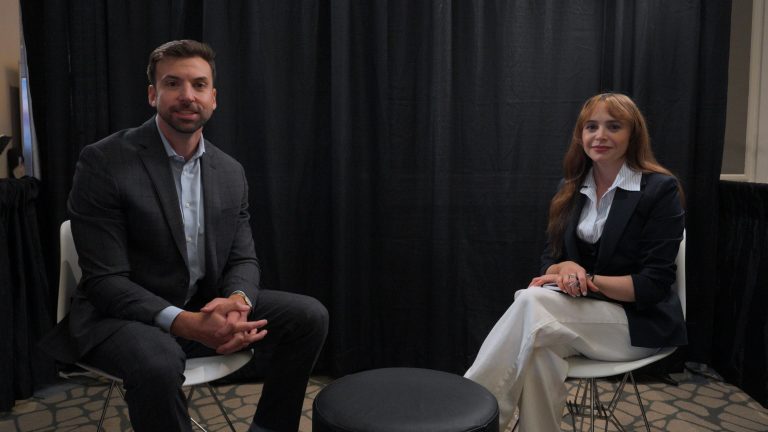
Steve Toland, Founder of TransFICC, discusses where the firm has been building out new trader workflows and making hardware tweaks to optimize price-quoting speeds for rates, credit, interest rate swaps, and FX.
While portfolio trading in fixed income has seen growing among the buy side, Toland details the challenges and complexities with the protocol as venues use different Application Programming Interfaces (APIs) and data standards. The CEO unpacks the firm’s efforts to normalize data delivery and APIs across various venues and shares the latest developments in its outsourced bank liquidity solution, following Citadel Securities Series B funding.
Interview
Josephine Gallagher – We’ve had a very busy year for rates. So tell us how have technology and data advancements have kept pace with this space?
Steve Toland – Well, a lot of work for us this year in the rates space. We’re always adding new workflows. So my favourite is Tacos – trader close off spread, in case you’re wondering. But we’ve also done Treasury spreads on the interest rate swap side, quite a few emerging market currency pairs. But most of the engineering work in the rates space has been sort of managing customers, sort of throughput of price contributions to venues, and also how quickly they can quote. So on the throughput side, some bank customers are sending us 30,000 messages a second to a single venue, you know, and that’s because they’ve got hundreds of instruments, multiple price tiers for different customers, and also have different triggers to update prices. So where we’re helping is basically to filter out duplicate quotes within a certain time frame, you know, a few milliseconds. We can filter that out. We’re also managing conflation. So if they send us, you know, say, 15,000 messages a second, and the venue will only handle 10,000 messages a second, we’ll filter that down, or conflate down, so they don’t get cut off. And then some of the trading venues have sort of changed from synchronous to asynchronous, so you can actually send a quote in now without having to get an acknowledgement on the previous quote for the same instrument. So we’ve done all that work and that basically helps the customers send more timely quotes to the venue. And then we have done some work to help a couple of customers in US Treasuries quote quicker. So that’s actually moving to specific hardware optimized so the bank customer can quote as quick as possible to their clients on the buy side, etc. So thread pinning, kernel bypass, et cetera, optimizing that hardware so our internal processing times are in the sort of sub-20-microsecond range, and that basically makes the bank more competitive when they’re quoting their clients.
Josephine Gallagher – So busy as you said. So we’ve also seen a big push in the electrification of credit markets. What is the next phase of development in that space?
Steve Toland – We’re always adding new venues. We added BondVision last year. LTX, we’ve just kicked off the works and your credit venue in the US, but most of the focus is actually on portfolio trading. TradeWeb, Bloomberg, MarketAxess, Trumid, BondVision, all now support portfolio trading via an API (Application Programming Interfaces). And the problem is they all do it slightly differently, okay? And obviously we’re API focused. So yes, it’s a bunch of buys and sells, and they come as a list. But on some of the venues, that list can be all or nothing. In some venues, it can be partial. You can quote, you know, 85 or 90 of the 100 bonds. How you receive those bonds in the list. Sometimes it all comes in one message. On some of the venues, they send you 100 different messages, you know, for that portfolio of 100. And then the individual line items, the bonds themselves. You can trade on price, you can trade them on spread, you can trade them on yield. You can trade on discount margin. Some venues allow you to trade the whole lot with one workflow. Some you can do every single line item using different workflows. And that gets quite complex to manage. So obviously, our original product was like one API Free Trading. That’s our sort of flagship product, trying to normalize the different APIs. But in the portfolio space, I think really what we’re trying to work on is one workflow for portfolio trading, and that’s a lot of focus at the moment.
Josephine Gallagher – Earlier this year, TransFICC announced that you have your series B funding led by Citadel Securities. Where is that investment being deployed?
Steve Toland – Well, I will give a shout out to Citadel Securities. We’re grateful for them investing in us. That was great. In April this year, we signed the first customer for what we’re calling an outsourced Citadel Securities liquidity solution in early June of this year. We’ve been hard at work on the development side of that. We’re now going to support multiple asset types. So we’re going to do gov bonds, corporate bonds and Interest Rate Swaps. We’ve done the development to split the workflow so intermediary bank will price some bonds themselves, but say, for a certain subasset class, etc, they will push those and get the quoting done by Citadel. We’ve built the interface between us and Citadel so everything can be auto-negotiated. We get the price from Citadel. We auto-negotiate on the intermediary bank’s behalf. And we’ve done some other work, you know, which is specific to the solution, in terms of masking client names from Citadel, and also some sort of margin work, you know, how Citadel is going to compensate the intermediary bank. We’re currently hard at work on the post-trade booking side of things. The aim is to get into full production with the first client in November. So that’s what we’re up to.
Catch Trader TV shows each week:
To watch Trader TV This Week shows go to – Video
Or make sure to follow us on LinkedIn – Trader TV’s LinkedIn
Available as a podcast – Link